Obsidian
Volcanic & Glassy Family
Obsidian is a naturally occurring volcanic glass, not a crystalline mineral. It forms when silica-rich lava cools so quickly that crystals have little time to grow, producing a hard, brittle rock with a glassy surface and sharp conchoidal fracture.
Identity
- Material or variety
- Glass
- Scientific or material identity
- Natural volcanic glass
- Classification
- Natural glass
- Composition or formula
- Silica-rich natural glass; composition varies
- Crystal system or structure
- Non-crystalline (amorphous)
- Geological or manufacturing origin
- Forms in igneous rock or volcanic material.
- Mohs hardness
- 5 to 5.5
- Specific gravity
- 2.3 to 2.6
Origins
Armenia · Iceland · Italy · Japan · Mexico · New Zealand · Peru · Turkey · USA
Appearance & optical properties
deep black glossy volcanic glass.
History & discovery
The name follows the Roman writer Pliny the Elder’s account of lapis obsidianus, a glassy stone associated with an explorer named Obsidius. People were making obsidian cutting tools hundreds of thousands of years ago, and long-distance trade networks later moved it far from volcanic sources.
Uses & care
- Common uses
- Obsidian has been knapped into blades, projectile points, and scrapers, polished into mirrors and ornaments, and cut today for jewelry, carvings, and specialized research blades.
- Handling and cleaning
- Clean polished obsidian with warm soapy water and a soft cloth. Store it away from harder gems and protect thin edges from knocks, because volcanic glass can scratch and chip despite its useful sharpness.
Jewellery
5 pieces of Obsidian jewellery. Learners earn each one in DigMyGem by learning words; until then it shows as a silhouette.
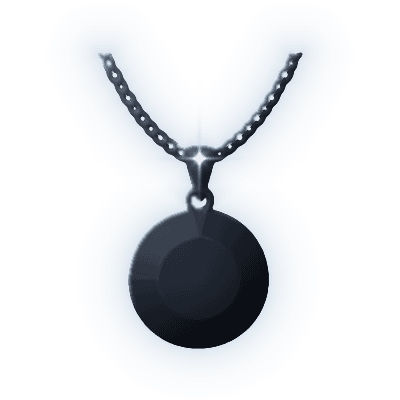
Scrying Mirror
Pendant
A polished disc of black obsidian hangs in a silver frame, said to show a travelling road to whoever gazes into it.
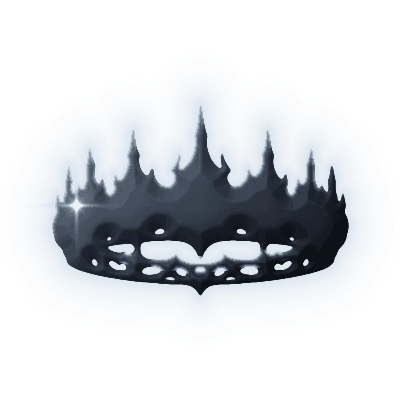
Volcano Crown
Crown
Faceted obsidian spikes ring a blackened gold band, sharp as cooled lava and just as dark.

Nightglass Ring
Ring
A flat obsidian tablet rests flush in a heavy silver band, drinking in the light instead of throwing it back.
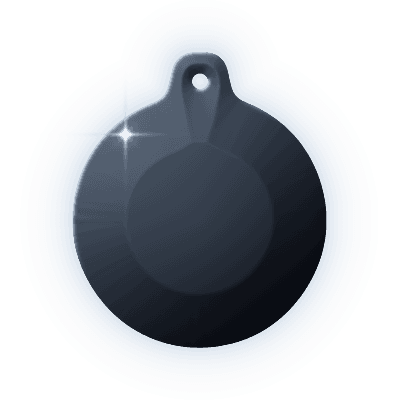
Dr Dee's Mirror
Jewel
An Aztec cult object of obsidian in the shape of a hand mirror, brought to Europe in the late 1520s. It is said to have belonged to the scholar John Dee, who tried to reach spirits by scrying; it later passed to Horace Walpole and is now in the British Museum.
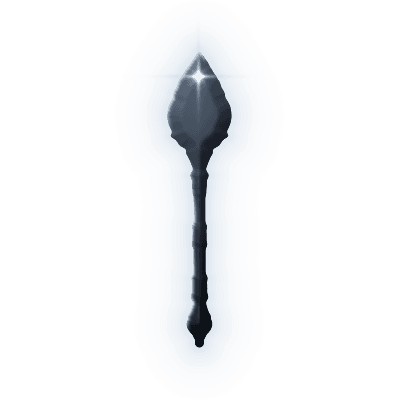
Black Glass Sceptre
Sceptre
An imagined sceptre with a head of knapped black obsidian, the volcanic glass, bound to a gold staff.