Fluorite
Other Silicates & Gemstones
Fluorite is crystalline calcium fluoride and commonly forms cubes or octahedra with perfect cleavage. Pure crystals are colorless, while structural defects and impurities create purple, green, blue, yellow, and other colors, often arranged in distinct zones; some specimens fluoresce under ultraviolet light.
Identity
- Material or variety
- Fluorite
- Scientific or material identity
- Fluorite
- Classification
- Natural mineral or mineral variety
- Aliases or trade names
- Fluorspar
- Composition or formula
- CaF₂
- Crystal system or structure
- Cubic
- Geological or manufacturing origin
- Can form in more than one geological environment, or combines several materials.
- Mohs hardness
- 4
Origins
China · Mexico · Mongolia · South Africa · UK · USA
Appearance & optical properties
translucent purple and green fluorite with color zoning.
History & discovery
Georgius Agricola recorded fluorspar as a smelting aid in 1530. The mineral's name comes from Latin fluere, “to flow,” for this use as a flux, and Carlo Antonio Galeani Napione introduced the name fluorite in 1797. In 1852, George Gabriel Stokes named fluorescence after the glow shown by some fluorite.
Uses & care
- Common uses
- Fluorite is carved, collected, and occasionally used in jewelry. Industrial grades serve as smelting flux and raw material for hydrofluoric acid, while optically clear crystals have been used in specialized lenses.
- Handling and cleaning
- Fluorite is soft and has perfect cleavage in four directions. Store it away from harder materials, avoid knocks and sudden heat, and remove dust only with a soft cloth or very gentle washing.
Jewellery
5 pieces of Fluorite jewellery. Learners earn each one in DigMyGem by learning words; until then it shows as a silhouette.
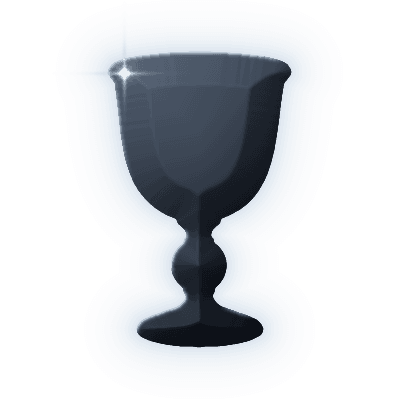
Derbyshire Blue John Goblet
Jewel
A turned goblet of banded Blue John fluorite, the rare Derbyshire stone whose purple, blue and honey bands made Georgian vases famous.
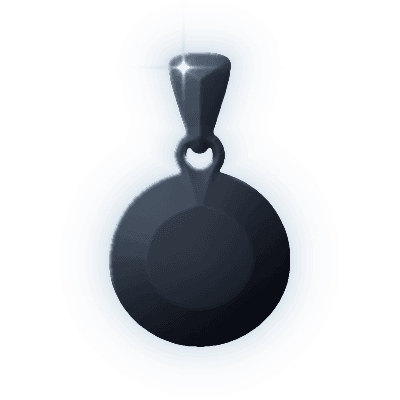
Violet Band Pendant
Pendant
A flat slice of banded fluorite in violet, blue and cream, framed in a thin silver bezel so the light passes through.

Blue John Banded Brooch
Brooch
An oval slice of banded fluorite pinned in gold, a small window of the stone's rarest colours.
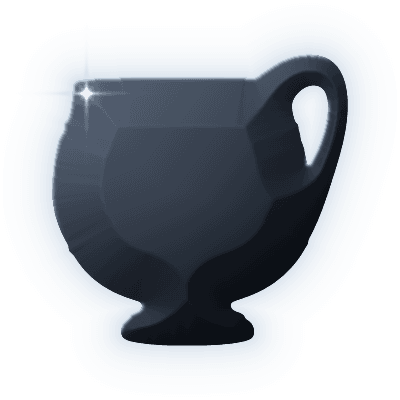
Barber Cup
Jewel
A Roman cup carved from fluorite around 50 to 100 AD, decorated in low relief with a vine and grapes. Pliny the Elder wrote of the huge sums paid for banded, many-coloured murrine cups like it; it is now in the British Museum.
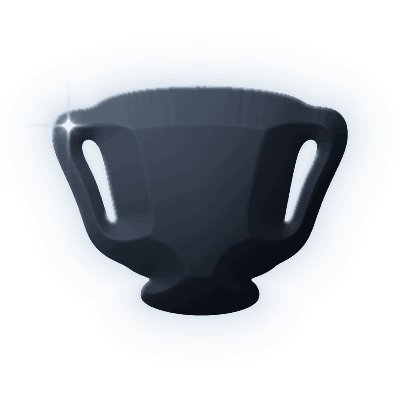
Crawford Cup
Jewel
A Roman two-handled cup, or kantharos, carved from fluorite in about 50 to 100 AD, close in design to the agate Cup of the Ptolemies in Paris. The Art Fund bought it for the British Museum in 1971 for £2,300 and named it after David Lindsay, 28th Earl of Crawford, a trustee of the museum.