Diamond
Natural Faceted Gems
Diamond is crystalline carbon with a cubic structure. It forms deep in Earth’s mantle and combines exceptional hardness with very high thermal conductivity.
Identity
- Material or variety
- Diamond
- Scientific or material identity
- Diamond
- Classification
- Natural mineral or mineral variety
- Composition or formula
- C
- Crystal system or structure
- Cubic
- Geological or manufacturing origin
- Forms in igneous rock or volcanic material.
- Mohs hardness
- 10
- Specific gravity
- 3.52
Origins
Canada · Namibia · Russia · South Africa
Appearance & optical properties
colorless high-clarity diamond with strong fire.
History & discovery
The name traces to the Greek adamas, meaning unconquerable or unbreakable. Diamonds were traded in India by the fourth century BCE; Brazil became a major source in the early 1700s, and the 1866 South African discovery helped create the modern diamond market.
Uses & care
- Common uses
- Gem-quality diamonds are cut for jewelry. Their hardness and thermal properties also make diamond useful in cutting, grinding, polishing, and specialized technical tools.
- Handling and cleaning
- Use warm water, mild soap, and a soft brush or lint-free cloth. A hard blow can chip a diamond, so protect facet edges and have jewelry settings checked; avoid ultrasonic cleaning for heavily included or treated stones.
Jewellery
11 pieces of Diamond jewellery. Learners earn each one in DigMyGem by learning words; until then it shows as a silhouette.
Hope Diamond
Pendant
A 45.52-carat deep blue diamond surrounded by white diamonds and hung as a pendant from a chain of white gold. It is held in the Smithsonian and is said to carry a curse.
Koh-i-Noor
Crown
A 105.6-carat diamond that has passed through the treasure of Mughal, Persian and British rulers and now sits in the crown made for Queen Elizabeth the Queen Mother.
Cullinan I
Sceptre
The 530.2-carat Great Star of Africa, cut from the Cullinan Diamond, is set in the head of the Sovereign's Sceptre with Cross. It is the largest clear cut diamond in the world.

Photo: Plate X, The Cullinan (1908)., Public domain, via Wikimedia Commons 
Orlov Diamond
Sceptre
The Orlov is an Indian diamond of about 190 carats that was set in the Russian Imperial Sceptre. It is kept in the Kremlin Diamond Fund.
Sancy Diamond
Pendant
The Sancy is a shield-shaped diamond named after Nicolas de Harlay, seigneur de Sancy. It passed through the French and English crowns and now sits in the Louvre.

Photo: Shonagon, CC0, via Wikimedia Commons 
Regent Diamond
Jewel
The Regent Diamond weighs about 141 carats and was set in the hilt of Napoleon coronation sword. It is displayed in the Louvre.

Photo: Shonagon, CC0, via Wikimedia Commons 
Tiffany Yellow Diamond
Brooch
The Tiffany Yellow Diamond weighs about 128 carats and is set in the Bird on a Rock brooch by Jean Schlumberger. It belongs to Tiffany and Co.

Photo: Shipguy, CC BY-SA 3.0, via Wikimedia Commons 
Noor-ol-Ain Diamond
Tiara
The Noor-ol-Ain is a large pink diamond mounted in the tiara made for Empress Farah of Iran. It is part of the Iranian Crown Jewels.

Photo: ACM83, Public domain, via Wikimedia Commons 
Spoonmakers Diamond
Jewel
The Spoonmaker Diamond is the largest diamond in the Ottoman treasury, about 86 carats. It is shown at Topkapi Palace set on a silver turban ornament.

Photo: Karakalem, CC BY 4.0, via Wikimedia Commons 
Dresden Green Diamond
Jewel
The Dresden Green is a rare natural green diamond of about 41 carats. It is set in a hat ornament kept in the Green Vault in Dresden.
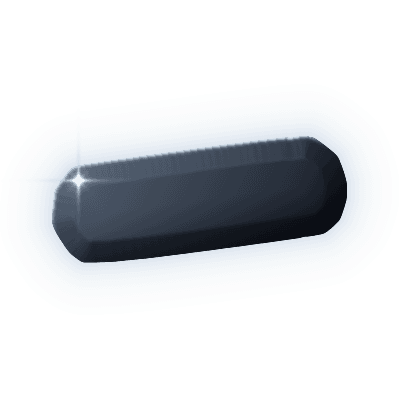
Shah Diamond
Pendant
The Shah Diamond is a long Indian-cut diamond bearing the names of Mughal and Persian rulers. It was hung near the Peacock Throne and is now in the Kremlin Diamond Fund.


